


In Vienna since the 1960s
 Drive & Conveyor Technology and Engineering Plastics
Roller chains, conveyor chains, modular belts and belting, plus low-friction and insulation materials, with application advice for engineers, designers, maintenance and purchasing.
No obligation · a photo or drawing is enough · reply by email or phone
Product range
Go straight to your product group
Two areas of expertise, thirteen product groups – each with standards, variants and a contact at a glance.
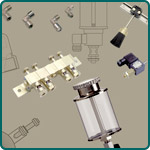
Drive & conveyor technology
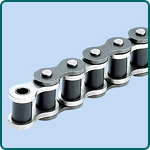
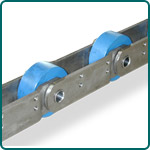
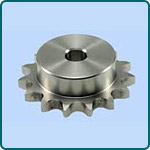
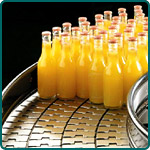
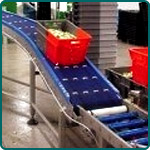
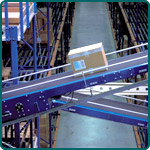
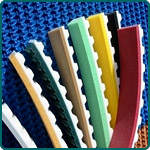
Roller chains, bush conveyor chains, sprockets, modular belts, plastic chains, conveyor belts, timing belts and lubrication systems.
-
-
-
-
-
-
-
-
-
Engineering plastics & insulation materials
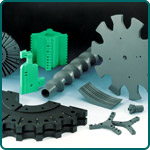
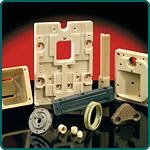
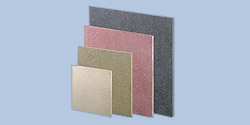
Sliding materials from UHMW-PE to PEEK as semi-finished products, standard parts or parts to drawing – plus heat-resistant insulation materials.
-
-
-
-
-
-
In 3 steps
From requirement to the right solution
Tell us what it is about – we will get back to you with a concrete proposal. No technical term required.
Partners
European quality manufacturers – represented in Austria by Katena
For decades we have represented renowned European manufacturers in Austria – selected for product quality, innovation, delivery reliability and short lead times.
-

-
-
 Tsubaki Jungbluth
Conveyor and lifting chains as bush conveyor chains
-

-
-
 Wippermann
Drive and conveyor chains as steel link chains
-
 Megadyne
Timing belts, V-belts and drive components
News
New from our partners
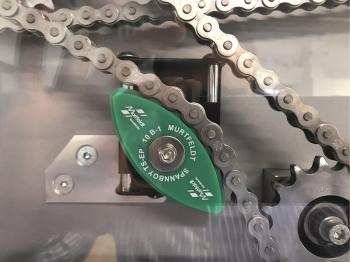
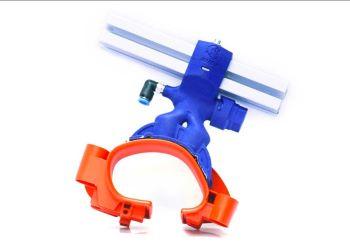
3 D printing by Murtfeldt
Read more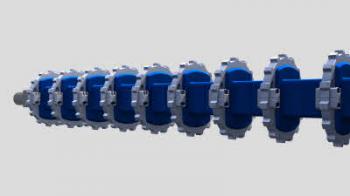
Revolutiionary new two part sprockets
Read more

Why Katena
You know your application. We know the right product.
-
01
Application advice
You know your application, we know the right product: support with selection and design, based on decades of experience.
-
02
Two areas of expertise
Drive & conveyor technology plus technical plastics & insulation materials from a single source.
-
03
Leading European manufacturers
Katena represents Wippermann, Jungbluth, Murtfeldt, DoTherm, Uni-Chains and Ammeraal Beltech in Austria.
-
04
Available at short notice
Semi-finished products, cut pieces, chain guides and tensioners stocked in many sizes in Vienna or at the manufacturer's plant.
- since the 1960sexperience in drive and conveyor technology
- 6 partner manufacturersfrom Germany and Europe
- 13 product groupsfrom roller chains to insulation materials
For design engineers
Chain drive live: calculate the chain length in seconds
Choose the pitch, enter the numbers of teeth and the centre distance – the calculator determines the number of links with the standard formula and shows the drive in motion.
About us
Drive / hoisting and conveying engineering plus technical plastics / insulation materials of the highest quality
We have been specialising specifically in the field of drive/materials handling engineering and plastics for decades.
We focus on a wide range of components that are used in many industrial drive and materials handling engineering applications. Our range of products encompasses chain-based solutions, building on the DIN standard. Steel or stainless steel roller chains, low or maintenance-free, and bush conveyor chains and lift chains for hydraulic steel construction.
Plastic conveyor chains such as slat top chains, cardan chains or snap-on chains supplement this light application range. Our high performance products such as drive, roller, bushing conveyor and plastic conveyor chains are employed in many industrial areas, for example steel works, automotive production, the food industry, logistics and many others.
As an alternative to standard roller chains, bushing conveyor chains or plastic conveyor chains, we offer modular belts, fabric belt conveyors, flat belts and toothed belts for applications such as the transportation of bulk food goods.
Modular belts provide solutions for the meat industry, vegetable processing, and the corrugated cardboard and automotive industries. On the other hand, in many cases there is demand for fabric belt conveyors, continuous fabric belts or special hygienic belts without fabric. Great emphasis is placed on hygiene in the food industry, e.g. in the meat processing industry. We employ not only modular belts but also conveyor belts with special equipment for their needs in such cases.
Many of the synthetic materials included in our range also fulfill these high standards of hygiene. Ranging from UHMW-PE to PEEK, from semi-manufactures to standard parts such as chain guides and tensioners to customised prefabricated parts, the scope for solutions is unlimited.
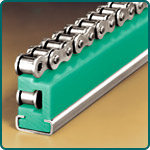
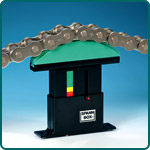
Not only semi-manufactured products and pre-cuts, but also chain guides and tensioners in numerous dimensions are stocked in Vienna or at the manufacturing plant in Germany, and therefore available at short notice. The low-friction materials, including UHMW-PE, Polyamide, POM, PEEK and many more can be found in many conveyor engineering applications and as customised parts in the construction of special machines. Machined parts range from individual prototypes to components produced in series.
The range of thermoplasts is supplemented by the collection of insulation materials. This extensive range includes laminated fabric, glass fibre reinforced plastics, mica materials and high temperature insulation materials.
The complex issue of insulation materials is particularly relevant in steel manufacturing, metal processing and injection moulding.
With our decades of expertise and close affiliation with manufacturing plants we can support and advise you in finding the perfect solution, whether it be roller chains, conveyor chains, belt conveyors, modular belts, conveyor belts and flat belts, toothed belts, or low friction and insulation materials.
FAQ
Quick answers
What is the difference between DIN 8187 and DIN 8188?
DIN 8187 covered roller chains of European design (B series, e.g. 08B-1), DIN 8188 those of American design (A series, equivalent to ANSI, e.g. 08A-1). Both standards have been withdrawn and are now combined in DIN ISO 606 (series B and series A). Even at the same pitch, roller diameter, inner width and pin diameter differ, so chains and sprockets of the two series are generally not interchangeable. If in doubt, check the marking on the link plate or send us a sample.
How do I identify the right roller chain?
The easiest way is to read the designation on the outer link plate, such as 10B-1. If there is none, measure the pitch (pin centre to pin centre), the roller diameter and the inner width between the inner plates, and count the strands. These values let you match the chain to ISO 606. For a new design, power, speed, tooth counts and operating conditions also matter. Katena helps with selection and design, also based on a photo or sample.
How do I calculate chain length?
The number of links X is approximately X = 2·a/p + (z1 + z2)/2 + ((z2 − z1)/(2π))² · p/a, where a is the centre distance, p the pitch and z1 and z2 the tooth counts. Round the result to a whole, preferably even number of links, as an odd number requires an offset link. Chain length equals the number of links times the pitch. Our online chain calculator does this calculation for you.
When should a roller chain be replaced?
Chains elongate as their joints wear. A common guideline is replacement at about 3 % elongation, i.e. roughly 30 mm per 1,000 mm of measured chain length; for precise drives or timing applications the limit is often lower. The manufacturer's specifications take precedence. With heavy wear, check the sprockets too, because worn teeth make a new chain wear faster.
Does Katena supply small quantities or single parts?
Katena focuses on application advice and solutions for industry, OEMs and distributors. Plastic parts to drawing are machined from single prototypes up to series production, and finished parts made of insulation materials are available from a quantity of one. Semi-finished products are also available as cut-to-size pieces. Whether a particular quantity of other products can sensibly be supplied is something we are happy to clarify case by case. Simply send us your enquiry.
Prefer to talk in person?
Call or write to us – with your application, dimensions or a photo of the old part.